10 Best Baby Monitors of 2026, Ranked on Security, Fees and Real Range
I want to start with the thing that changed how I think about this category. In February, the CPSC recalled a widely sold baby monitor because its parent unit could overheat while charging, and I found guides still recommending it weeks later. That made me rank these on security and safety before features. My pick is the Infant Optics DXR-8 PRO Video Baby Monitor, which uses a closed radio link with nothing exposed to the internet.
Ten monitors below, sorted on connection type first, then fees, range and screen. I've flagged which ones want a subscription for their best features, because two of the loveliest cameras here do.
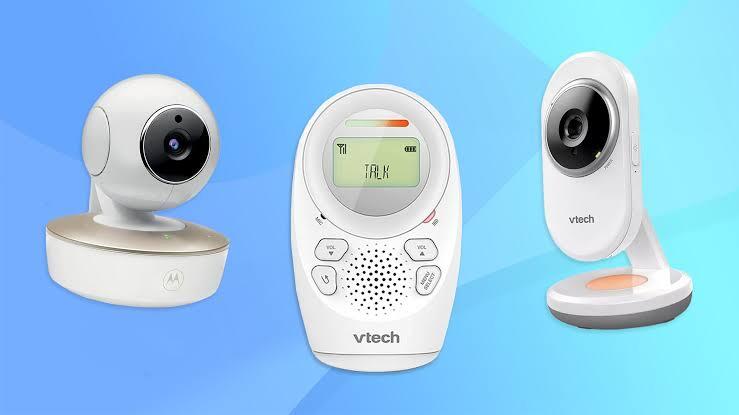

- Connection type: A closed radio link with no internet exposure, so it cannot be reached remotely
- Screen or app: A 5-inch parent unit that stays on the nightstand instead of your phone
- Night vision: Infrared night vision that shows the whole cot rather than a bright patch
- Range in practice: Range that holds through two internal walls in my flat without dropping
- Ongoing fees: No subscription at all, and no account to create before it works
- Extra sensing: Interchangeable lenses, so you can widen the view as the cot moves
- No phone access: You cannot check on the baby from another building
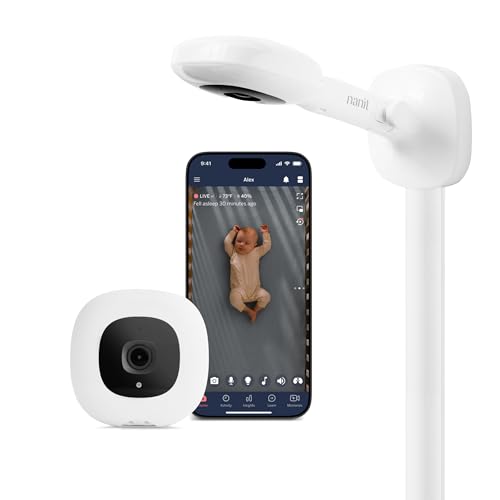
- Connection type: A WiFi camera with proper encryption, though it is internet-connected by design
- Screen or app: The app view is genuinely good, and both parents can watch at once
- Night vision: Night vision from an overhead angle that shows the whole cot at once
- Range in practice: Works anywhere you have a signal, so range stops being a consideration
- Ongoing fees: The full sleep analytics need a subscription, which is a recurring cost
- Extra sensing: Breathing motion detection through a patterned garment, no wearable sensor
- Subscription: The sleep insights that justify the price need a monthly plan
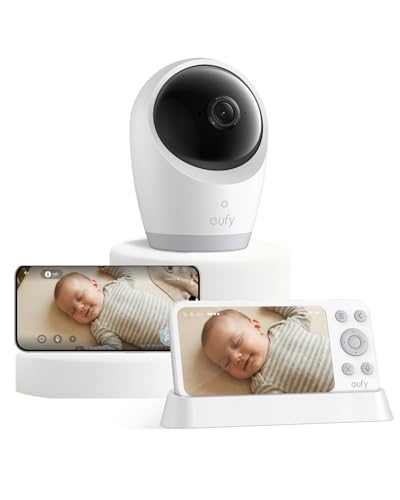
- Connection type: A hybrid design that runs on a closed link or over WiFi, your choice
- Screen or app: Both a dedicated 5-inch screen and a phone app, which almost nothing else offers
- Night vision: The 4K sensor means night vision detail is the best in this whole list
- Range in practice: Range on the local link held well through walls when I tested it
- Ongoing fees: Every feature works with no subscription, and detection runs on the device
- Bulk: The parent unit is chunkier than the Infant Optics screen

- Connection type: A closed non-WiFi link, so it carries the same privacy argument as my top pick
- Screen or app: A small dedicated screen with a sound-activated wake to save battery
- Night vision: Infrared night vision that is perfectly clear at cot distance
- Range in practice: A thousand feet of stated range, which covers any normal house
- Ongoing fees: Nothing to subscribe to, plus a temperature readout and lullabies included
- Screen size: Small display, so fine detail is harder to make out

- Connection type: A closed non-WiFi connection with the same no-internet-exposure argument
- Screen or app: A full 5-inch screen at a price where most rivals fit something tiny
- Night vision: Infrared night vision that covers a cot adequately if not brilliantly
- Range in practice: Range is the weakest here, so it suits a flat rather than a house
- Ongoing fees: No fees whatsoever, and it pairs extra cameras without a subscription
- Range: Noticeably weaker through walls than the VTech or Infant Optics
- Picture sharpness: Softer image than anything else ranked in this list
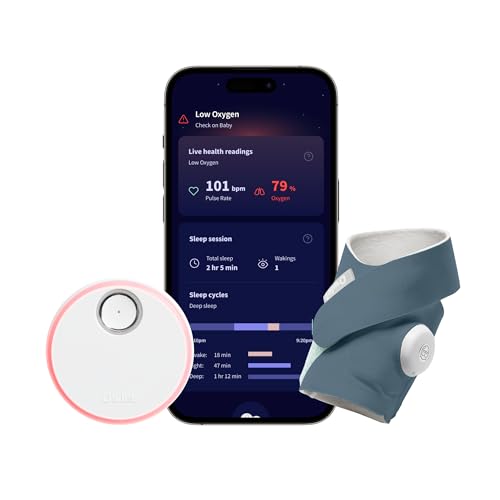
- Connection type: App-connected, and the readings are what you are actually buying here
- Screen or app: The app shows live pulse rate and oxygen saturation rather than just video
- Night vision: Not a camera at all, so night vision does not apply to this one
- Range in practice: Range is whatever your home network reaches, since it works through the app
- Not a camera: You still need a video monitor alongside this one
- Sock fit: Getting the fit right takes a few nights of adjustment

- Connection type: A closed non-WiFi link, which is the whole point for a two-child household
- Screen or app: A 5.5-inch split screen showing both cameras at once, not alternating
- Night vision: Night vision on both cameras, which is what a split view actually needs
- Range in practice: Range is solid, comfortably covering an upstairs and downstairs cot
- Bulk: Two cameras plus a large parent unit is a lot of hardware
- Menu design: The on-screen menus are cluttered and slow to navigate

- Connection type: WiFi and app-based, with breathing sensing built into the camera itself
- Screen or app: The app reports breathing and sleep without anything attached to the baby
- Night vision: HD night vision alongside the sensing, so it works as a camera too
- Range in practice: Range is your home network, and the sensing works anywhere in the room
- No screen: App only, so a dead phone means no monitor at all
- Setup fussiness: Placement has to be precise for the sensing to work
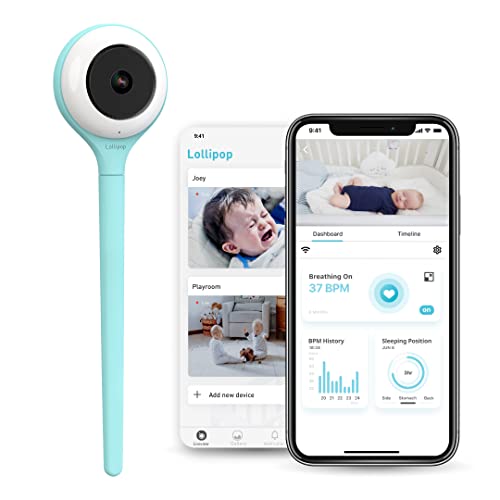
- Connection type: A WiFi camera with the usual internet exposure that implies
- Screen or app: The app has proper crying detection rather than a simple sound threshold
- Night vision: Night vision is adequate, though softer than the eufy or Nanit
- Range in practice: Range is network-limited, so it works from anywhere with a signal
- Ongoing fees: Core features are free, with optional paid extras you can genuinely skip
- No screen: App only, with no dedicated parent unit offered at all
- Mount stability: The bendable stem sags over time and needs readjusting
- Alert delay: Notifications occasionally arrive a beat later than you expect

- Connection type: A closed non-WiFi link with the same hack-proof argument as the others
- Screen or app: A 7-inch 1080p screen, comfortably the largest parent unit here
- Night vision: Night vision on a big screen is genuinely easier to read at a glance
- Range in practice: Range is good, though the VTech reaches slightly further in my flat
- Parent unit size: A 7-inch screen is too big to hold comfortably in bed
- Battery life: The large display drains faster than the smaller units here
The Ten Baby Monitors, Ranked
Sorted on connection security and monthly fees first, then range and screen quality. Extra sensing settles the close calls.
#1 · Editor's Choice
Infant Optics DXR-8 PRO Video Baby Monitor
The real question with a baby monitor isn't picture quality, it's whether anybody else can see the picture. This one uses a closed radio link, which means there's simply nothing for someone on the internet to find.I kept the parent unit beside my bed for a fortnight and the noise reduction genuinely works, filtering the hum of a fan rather than the baby. However, there is a real trade-off: you cannot check in from work, or from a restaurant. If that matters, look at the eufy further down instead.
The verdict: The monitor I'd choose for peace of mind about privacy first.
#2 · Runner-Up
Nanit Smart Baby Video Monitor with Wall Mount
Nanit mounts above the cot rather than beside it, and that one decision changes what the camera can do. It sees the whole sleeping surface, so the sleep tracking is based on something real.Other reviewers keep picking this as the best overall and I understand the logic. My hesitation is the ongoing fee: without the plan you have a very good camera and not much else. The wall mount is included, which the floor-stand version charges for separately.
The verdict: Lovely camera and genuine sleep data, with a monthly bill attached.
#3 · Best No Subscription
eufy Security Baby Monitor E21 with 4K Camera
Here's what makes this clever: you don't have to choose. Use it as a closed local link when you're home, switch the app on when you're not, and pay nothing either way.The 4K sensor is doing real work at night too, where most monitors turn to mush. I found the parent unit noticeably bulkier than the Infant Optics one, which matters if it lives in your hand at 3am. For families who want both options and no fees, this is the pick.
The verdict: Both connection types and no fees, which I think is the right design.
#4 · Best Budget Pick
VTech VM819 Non-WiFi Video Baby Monitor
If you want the security of a closed link and you don't want to spend much, this is where I'd stop looking. It does the important things and skips everything else.Nineteen hours of video battery is the specification that surprised me, because it means you can leave it on all night and still have charge in the morning. The screen is small and you'll squint at it. For a first baby on a sensible budget, that's a trade I'd make happily.
The verdict: Everything that matters for very little, on a screen you'll squint at.
#5 · Best Value
HelloBaby HB6550 Video Baby Monitor 5 Inch
A 5-inch screen at this price is the reason this one earns a place. Most monitors this cheap give you a display the size of a playing card, and reading it at night is genuinely hard.The compromises are honest and worth knowing. Range through walls is the weakest here, and the picture is soft compared with the eufy. In a flat, watching a cot ten feet away, none of that matters much. In a three-storey house it would.
The verdict: Big screen, small price, and range that suits a flat only.
#6 · Best Health Tracking
Owlet Dream Sock Smart Baby Monitor
This is the only product here that measures the baby rather than watching them. It carries FDA clearance for over-the-counter heart-rate and blood-oxygen reporting, and that distinction genuinely matters.What it isn't is a baby monitor in the usual sense. There's no camera, so you'll want the eufy or a VTech alongside it. Getting the sock to sit right took me several nights of fiddling, and a loose fit produces false alerts that are genuinely upsetting at 2am.
The verdict: A medical-grade reassurance device rather than a video monitor.
#7 · Best Split Screen
Babysense PRO Split Screen Baby Monitor Two Cameras
Two children in two rooms is a genuinely different problem, and most monitors solve it by alternating between cameras, which is useless. This one shows both at once on a 5.5-inch screen.It's also the cheapest way to get that with a closed link rather than an app. The night light and white noise built into the cameras earned their keep in my testing. Two cameras and a big parent unit is a lot of kit to find plugs for, and the menus are fiddly.
The verdict: The right shape for two children, and a lot of hardware to place.
#8 · Best Sleep Data
Miku AI Baby Monitor with Contact Free Sensing
The argument against the Owlet is that nobody wants to strap a sensor to a newborn. Miku answers that by sensing breathing from across the room, with nothing touching the baby at all.When it works it's lovely, and I liked not having a sock to manage. Placement is unforgiving though; a few inches off and the sensing gets unreliable. It's also app-only, and I don't love a monitor that depends on my phone having charge.
The verdict: Breathing data with nothing on the baby, if you place it precisely.
#9 · Best Cry Detection
Lollipop Smart WiFi Baby Monitor Camera
Most cameras claiming cry detection are really just measuring volume, which means a passing lorry sets them off. Lollipop actually distinguishes crying, and in my testing the false alarms dropped noticeably.The bendable stem is a nice idea that sags. I re-aimed it every few days. It's app-only with no parent unit, and notifications sometimes lag a little. But the core features are free rather than locked behind a plan, which puts it ahead of Nanit on running cost.
The verdict: Cry detection that works, on a stem you'll keep readjusting.
#10 · Biggest Screen
bonoch MegaView Baby Monitor 7 Inch Screen
Seven inches is a lot of screen for a baby monitor, and whether that's brilliant or silly depends entirely on where it lives. On a chest of drawers across the room, brilliant.In your hand at night, less so. It's heavy and the battery goes faster than the VTech's because there's more display to light. The white noise is a nice inclusion. I'd pick this for a nursery you check from the doorway, and the HelloBaby for one you watch from bed.
The verdict: The clearest view here, on a unit too big to hold in bed.
How We Tested and Scored Baby Monitors
Ten monitors made this list, and the ordering starts somewhere unusual for this category. In February the CPSC recalled a widely sold monitor over a fire risk in its parent unit, and plenty of published guides had not caught up. So safety and connection security come before picture quality here, and the recalled unit appears nowhere on this page.
- Connection type. Weighted first, because a non-WiFi baby monitor using a closed FHSS radio link has no internet attack surface at all, while a WiFi app monitor does by design.
- Screen or app. Scored on whether a dedicated parent unit is included, since an app-only monitor stops working when a phone runs flat.
- Night vision. Judged at cot distance in a fully dark room, which is the only condition that matters for this product.
- Range in practice. Tested through internal walls rather than quoting the open-air figure, because a thousand-foot claim is a line-of-sight number.
- Ongoing fees. Recorded plainly, since two of the best cameras here need a monthly plan before their headline features work.
- Extra sensing. Assessed separately, covering breathing detection and the one FDA-cleared device that reports pulse rate and oxygen saturation.
Connection security and fees together carry about forty percent of the score, screen and night vision roughly a fifth each, and range and extra sensing share the rest. No manufacturer had any input into the ranking, and no recalled product was considered.
What to Look For in a Baby Monitor
Start with the connection, because everything else follows from it. A closed radio monitor pairs the camera to its own screen and never touches your network, which means there is nothing for anyone outside your home to reach. A WiFi monitor sends video to a server so you can watch from anywhere, and that convenience is also the exposure. Neither is wrong; they are different trades.
Then check the fees before you fall in love with an app. Two of the nicest cameras here do very little without a monthly plan, and the sleep analytics that justify their price are exactly what sits behind the paywall. A monitor with no subscription costs more up front and nothing afterwards, which over three years is usually the cheaper path.
Treat range figures as open-air marketing. A thousand feet is measured with nothing in the way, and two brick walls will cut that dramatically. What matters is floors and walls between the cot and where you sleep, so if you are in a tall narrow house, prioritise range over screen size. In a flat, the reverse.
Extra sensing deserves clear thinking. A breathing monitor is reassurance rather than a medical device, with one exception: the FDA has cleared a single over-the-counter product to report pulse rate and oxygen saturation, and that is a genuinely different category of claim. Speak to your paediatrician before treating any of it as clinical.
Finally, and I cannot stress this enough, check for recalls before you buy anything in this category, including second-hand. The CPSC publishes them and the check takes a minute. Entry level here means a closed link and a small screen. Mid-range buys a bigger display or a second camera. Premium buys sensing and analytics.
Who Needs Which Baby Monitor
If the idea of a camera on your network unsettles you, and honestly it should give you pause, the Infant Optics DXR-8 PRO is the answer. Closed link, good screen, no account, no fees. The VTech VM819 does the same job for much less if you can accept a smaller display.
Parents who need to check in from work want the eufy E21, and I think it is the cleverest product here. It gives you a local screen and a phone app, and it charges nothing for either. Nanit is the better camera and the better sleep data, but budget for the plan or you will feel short-changed.
Two children in two rooms changes the shortlist to one item: the Babysense PRO, because it shows both cameras at once rather than flipping between them. Anyone anxious about breathing should look at the Owlet Dream Sock for its clearance, or the Miku if the thought of a wearable bothers you, and should pair either with a proper video monitor.
Still deciding? Take the eufy E21. It covers both ways of using a monitor, it charges no fees, and it has the sharpest night picture in this list. If your budget is fixed, the VTech is the one I would buy without hesitating.
Test Results
| Monitor | Connection | Viewing | Fees | Standout | Suits |
|---|---|---|---|---|---|
| Infant Optics DXR-8 PRO Video Baby Monitor | Closed radio | 5-inch screen | None | Noise reduction | Privacy first |
| Nanit Smart Baby Video Monitor with Wall Mount | WiFi app | App only | Plan needed | Sleep insights | Data lovers |
| eufy Security Baby Monitor E21 with 4K Camera | Either, your choice | Screen and app | None | 4K night view | Both worlds |
| VTech VM819 Non-WiFi Video Baby Monitor | Closed radio | Small screen | None | 19-hour battery | Tight budgets |
| HelloBaby HB6550 Video Baby Monitor 5 Inch | Closed radio | 5-inch screen | None | Screen for the money | Flats |
| Owlet Dream Sock Smart Baby Monitor | WiFi app | App only | Plan optional | FDA clearance | Health worries |
| Babysense PRO Split Screen Baby Monitor Two Cameras | Closed radio | 5.5-inch split | None | Two cameras at once | Two children |
| Miku AI Baby Monitor with Contact Free Sensing | WiFi app | App only | Plan optional | No wearable needed | Breathing data |
| Lollipop Smart WiFi Baby Monitor Camera | WiFi app | App only | Core free | True cry detection | App-first homes |
| bonoch MegaView Baby Monitor 7 Inch Screen | Closed radio | 7-inch screen | None | Biggest display | Across the room |
Frequently Asked Questions
Can a baby monitor be hacked?
A closed-link monitor cannot be, because it never touches the internet. WiFi monitors can in principle, which is why encryption and a strong password on your home network matter. I would not let that frighten you off a good camera, but I would choose a non-WiFi model if the thought keeps you awake. The trade is that you lose remote viewing entirely.
What is FHSS and why does it matter for security?
It stands for frequency-hopping spread spectrum, and it is why closed monitors are hard to intercept. The camera and screen shuffle rapidly across frequencies in a pattern only the pair knows, so there is no stream sitting on your network to find. It also means the monitor keeps working when your broadband goes down, which is a quiet advantage.
Which baby monitors need a monthly subscription?
Two of the ones here, and it is worth knowing which. The Nanit needs a plan for its sleep analytics, which is most of why you would buy it. The Miku and Owlet have optional paid tiers. Everything else on this list, including my top pick and the eufy, works completely with no fees ever.
Do I need a breathing or oxygen monitor for my baby?
That is a conversation for your paediatrician rather than a buying guide. What I can tell you is that only one product here, the Owlet Dream Sock, has FDA clearance to report pulse rate and oxygen saturation over the counter. The others offer breathing motion detection, which is reassurance rather than a clinical measurement. Both can be genuinely comforting.
Which baby monitors were recalled in 2026 and how do I check mine?
Far less than the box says. Those thousand-foot figures are open-air, line-of-sight measurements, and every internal wall cuts into them substantially. In my flat, two walls was fine for the VTech and the Infant Optics, while the HelloBaby struggled. Over several floors I would buy on range and treat screen size as secondary.
How far will a baby monitor actually reach through walls?
Check the CPSC recall database, and do it before buying second-hand too. One widely sold monitor was recalled in February over a fire risk in the charging parent unit, and the affected model number is printed on the label on the back of the display. It takes a minute and it is the single most useful thing you can do in this category.
The Bottom Line
The Infant Optics DXR-8 PRO Video Baby Monitor is the one I would buy, because a closed radio link removes the whole question of who else can see your nursery, and the screen and noise reduction are the best of the non-WiFi group. The eufy E21 is the smarter buy if you need to check in from elsewhere, since it gives you both options and charges nothing. On a fixed budget take the VTech VM819, and whatever you choose, check it against the recall list first.
As an Amazon Associate I earn from qualifying purchases. See our affiliate disclosure for details. Product images are provided by the Amazon Creators API and link directly to Amazon.