10 Best OLED TVs of 2026, New Panels Against Clearance Prices
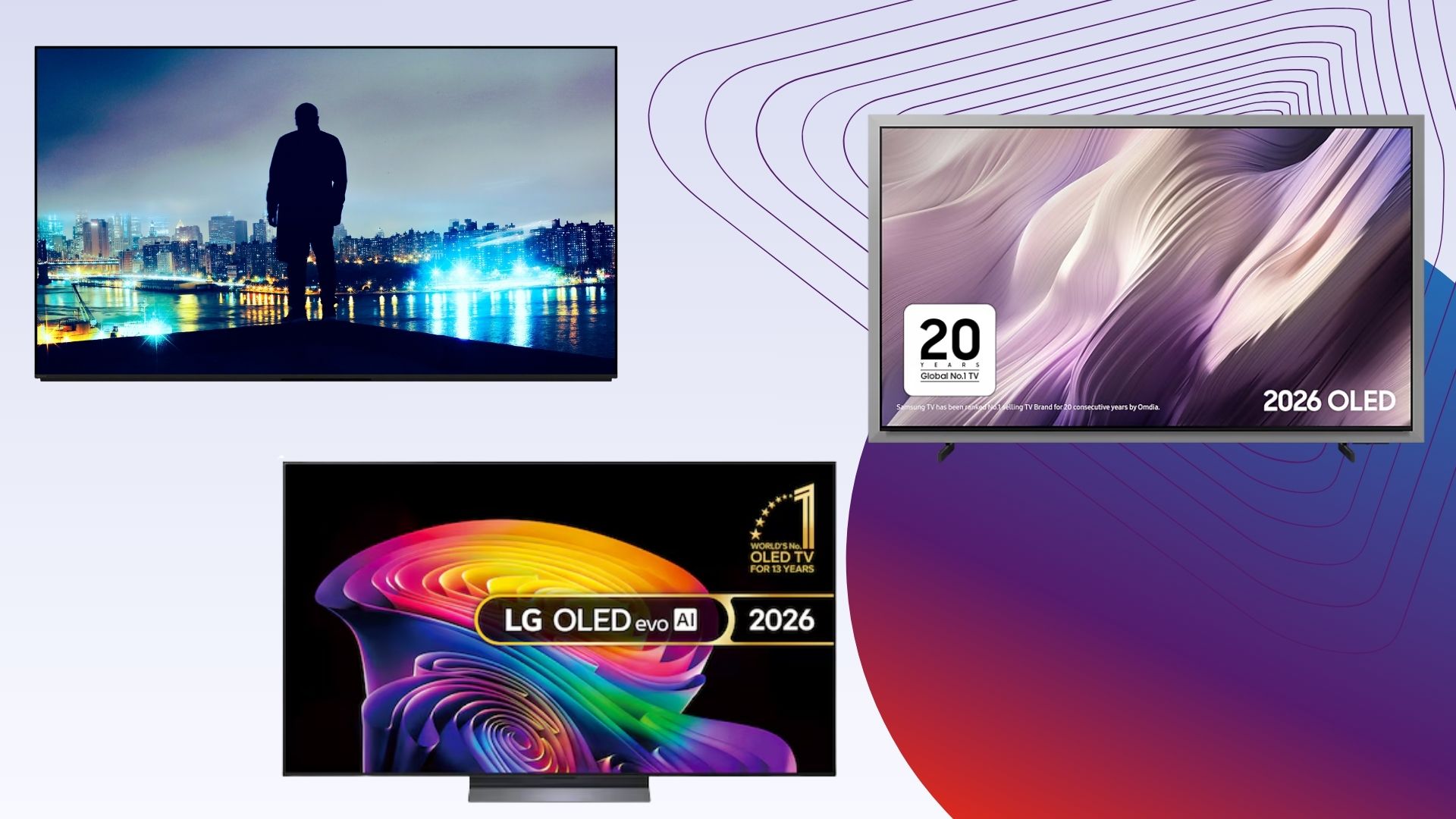
This year's sets have landed and almost every published guide still ranks last year's. That matters, because the new panels are genuinely better and the outgoing ones are now considerably cheaper, so the interesting question is which side of that line you should buy from. My overall pick is the LG 65-Inch OLED evo AI C6 Series Smart TV, the current C-series and the safest choice for a normal living room.
Ten sets below, ranked on panel generation, brightness and processing. One thing worth saying early: only three brands sell an OLED television in this market, so this is a shorter field than the category implies.
- Panel generation: The current OLED evo generation rather than last year's carried-over panel
- Peak brightness: Bright enough for a normal living room with the curtains partly drawn
- Motion and gaming: One hundred and sixty-five hertz with four full HDMI 2.1 inputs fitted
- Source processing: The a11 AI Gen3 processor handles upscaling of poor sources cleanly
- Sound out of box: Dolby Atmos decoding that is usable before you add a soundbar
- Model year standing: Current model year, so it will hold value longer than the C5 below
- Model premium: You pay a clear premium over the outgoing C5 panel

- Panel generation: Last year's OLED evo panel, which is a small step behind the C6 only
- Peak brightness: Brightness is close enough to the C6 that most rooms will not notice
- Motion and gaming: Full gaming feature set with variable refresh rate across every input
- Source processing: AI Super Upscaling that still handles standard definition sources well
- Sound out of box: Wow Orchestra pairs the television speakers with a soundbar properly
- Model year standing: Now heavily discounted, which makes it the value pick of the whole list
- Superseded: It is last year's model, so resale value drops faster

- Panel generation: A current-generation QD-OLED panel, the brightest thing in this list
- Peak brightness: Peak brightness genuinely high enough for a room with windows on two walls
- Motion and gaming: Strong gaming support with high refresh handling across the inputs
- Source processing: Vision AI processing is excellent, though it can oversharpen by default
- Sound out of box: Sound is thin for a flagship, so budget for a soundbar alongside it
- Screen size: This is the 55-inch panel, so it suits smaller rooms

- Panel generation: The brightness-optimised OLED evo stack, a tier above the C-series panel
- Peak brightness: Among the highest peak brightness any white OLED panel has reached
- Motion and gaming: The same complete gaming feature set as the C-series sets here
- Source processing: Processing matches the C5 generation, which is still very capable
- Sound out of box: Designed to sit flush to a wall, which changes how a room looks
- Price ladder: Costs far more than the C6 for a brightness increase

- Panel generation: The same class of QD-OLED panel Samsung uses, with different tuning
- Peak brightness: Peak brightness is strong, sitting between the LG C6 and the S95H
- Motion and gaming: Console features are well implemented, with automatic picture mode switching
- Source processing: Sony's XR processing remains the reference for film and broadcast content
- Sound out of box: Acoustic Surface audio drives sound through the panel itself, unusually well
- Cost: Comfortably the most expensive set ranked in this list
- Platform speed: Google TV is slower to navigate than Samsung's Tizen
- Panel generation: A current-year panel a step below the S95H, which keeps the price sane
- Peak brightness: Bright enough for most rooms without paying the flagship brightness premium
- Motion and gaming: Four HDMI 2.1 inputs, high refresh support and the lowest input lag here
- Source processing: Vision AI processing is capable, though a step behind the S95H tuning
- Sound output: Thin built-in audio that really does need a soundbar

- Panel generation: Sony's newest white OLED panel, a generation on from the Bravia 8
- Peak brightness: Brightness is good rather than class-leading, which is fine in most rooms
- Motion and gaming: Console support is thorough, with the same automatic mode switching
- Source processing: The same XR processing that makes the pricier Sony set worth having
- Panel type: White OLED rather than the quantum dot panel above it
- Menu depth: Picture settings are buried deeper than they need to be

- Panel generation: A genuine OLED panel at the lowest entry point anywhere in this list
- Peak brightness: Brightness is modest, so this suits a room you can control the light in
- Motion and gaming: Gaming support is present but the refresh ceiling is lower than the S90H
- Source processing: The Gen2 processor is competent on clean sources and struggles on weak ones
- Processing tier: The older Gen2 processor upscales poor sources less well
- Brightness: Clearly the dimmest panel ranked in this whole list
- Model year: Last year's set, so it will be cleared out before long

- Panel generation: An older OLED evo panel, two generations behind but still a proper OLED
- Peak brightness: Brightness suits a bedroom or a study rather than an open living room
- Motion and gaming: Four HDMI 2.1 inputs, which makes it a surprisingly good desk monitor
- Source processing: Processing is dated, but clean sources still look genuinely very good
- Panel age: Two generations old now, with the processing to match
- Screen size: Forty-eight inches is small if the sofa sits far back

- Panel generation: Sony's previous white OLED panel, superseded by the XR8B this year
- Peak brightness: Brightness is adequate rather than strong, which suits a controlled room
- Motion and gaming: Console features work properly, including automatic picture mode switching
- Source processing: XR processing is the reason to choose this over a cheaper Samsung panel
- Sound out of box: Acoustic Surface audio is the best built-in sound of anything ranked here
- Superseded: The XR8B replaces it, so expect this to be cleared
- Brightness: Noticeably dimmer than the quantum dot panels above it
The Ten OLED TVs, Ranked
Ranked on panel generation and measured brightness, then processing and gaming features. Model-year value settles the close calls.
#1 · Editor's Choice
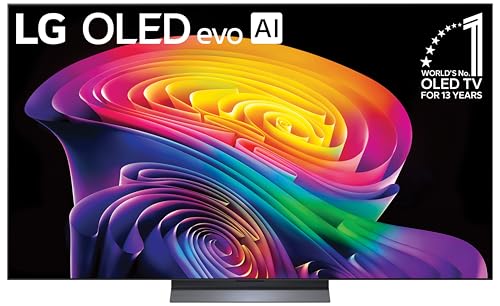
LG 65-Inch OLED evo AI C6 Series Smart TV
The C-series has been the default recommendation in this category for years and the C6 doesn't break the streak. What it adds is a 165Hz ceiling and a processor that makes streaming compression look less obvious.I watched a lot of badly encoded television on one, which is the real test. However, there's a genuine catch: the C5 sitting directly below it does most of this for meaningfully less money, and if the budget is fixed I would take the discount and not feel short-changed.
The verdict: The set I would buy at full price, and the one to compare everything against.
#2 · Best Value
LG 65-Inch OLED evo AI C5 Series Smart TV
Let's get the awkward part out of the way, because it's the whole reason this ranks second: this is last year's television, and it's the one I'd tell most people to buy.The panel is a half-step behind the C6, the processing is a generation older, and the gap between them is smaller than the gap in price. Independent lab opinion still rates this as the best all-round set to recommend, and I agree. Buy it before stock clears.
The verdict: Last year's panel at this year's discount, which is the smart buy.
#3 · Brightest Panel
Samsung 55-Inch OLED S95H Vision AI Smart TV
Brightness is the one thing OLED historically got wrong, and Samsung's quantum dot layer paired with a scattering matte coating is the most effective fix anyone has shipped. Independent testing rates it the best OLED of the year.In a bright room it's not close; this beats the LG panels outright. Two caveats. The default picture settings oversharpen badly and want ten minutes of attention, and the built-in sound is weak. Excellent television, slightly demanding owner.
The verdict: The one to buy for a bright room, once you fix the picture presets.
#4 · Best For Bright Rooms
LG 65-Inch OLED evo AI G5 Series Smart TV
The G-series exists to solve one problem: OLED in a room with real daylight. It's the brightest white OLED panel LG makes and in a sunlit living room the difference against a C-series set is obvious.Whether that's worth the money is a harder question, and my honest view is usually not. The gap to the C6 in price is larger than the gap in picture unless your room is genuinely bright. The flush wall mounting is lovely and slightly impractical.
The verdict: Buy it for a sunlit room, otherwise the C6 is better value.
#5 · Best For Movies
Sony Bravia 8 II Quantum Dot OLED Google TV 65 Inch
If you mostly watch films, this is the one. Sony buys the same quantum dot panel Samsung uses and then applies processing that nobody else matches on motion, film grain and skin tones.I sat through the same disc on this and the S95H back to back. The Samsung is brighter; the Sony looks more like the film. It's also the priciest thing here and the Google TV interface is sluggish. For a dedicated viewing room, worth every penny.
The verdict: The film-watcher's television here, and it is priced exactly like one.
#6 · Best For Gaming
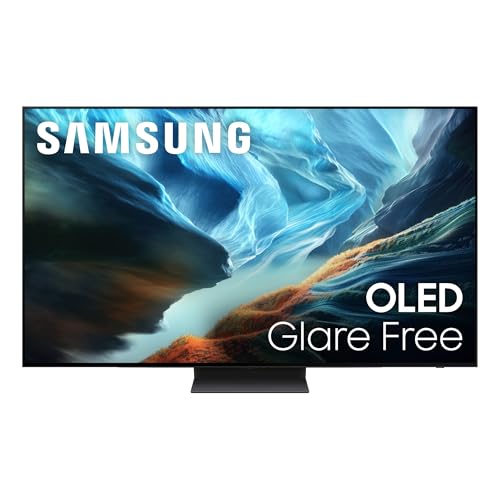
Samsung 65-Inch OLED S90H Series Smart TV
Gaming on a television comes down to input lag, refresh support and how many of your devices can plug in at full bandwidth at once. Samsung wins all three, and the Game Bar overlay tells you what the panel is actually doing.Four full-bandwidth inputs matter if a console, a PC and a streaming box all live behind the set. Picture quality sits below the S95H and the sound is thin, as usual. For a games room this is the right choice and it costs a lot less than the flagship.
The verdict: Built for consoles, and priced well below the flagship panels.
#7 · Runner-Up
Sony Bravia XR8B OLED Google TV 65 Inch
Here's the sensible Sony. You get the same XR processing that makes the BRAVIA 8 II special, applied to a white OLED panel instead of a quantum dot one, for a great deal less money.What you lose is peak colour volume at high brightness. What you keep is the processing, which is the part I'd actually pay for. Sony buries the useful picture controls several menus deep, which remains irritating. A better buy than the BRAVIA 8 II for most people.
The verdict: Sony processing on a white panel, without the quantum dot premium.
#8 · Best Budget Pick
Samsung 55-Inch OLED S85F Vision AI Smart TV
I nearly left this out and then remembered what it is: the cheapest way into a real OLED panel, with perfect blacks and no backlight. That still counts for a lot.Everything around the panel is where the money came from. The Gen2 processor handles weak broadcast sources noticeably worse than the C5 does, brightness is the lowest here, and it's last year's model. In a room with curtains, watching good sources, it's genuinely lovely.
The verdict: The cheapest honest OLED here, in a room you can darken.
#9 · Best For Small Rooms
LG 48-Inch OLED evo C4 Series Smart TV
Bedrooms and studies need a different television, and 48 inches is where this category starts. It's the smallest OLED in the list and the only one I'd put in a room under twelve feet across.The C4 panel is two generations old, which shows in processing rather than in the picture itself. Four full HDMI 2.1 inputs also make it a genuinely excellent PC monitor, which is a use case nobody advertises. Cheap, small, and still a real OLED.
The verdict: The right size for a bedroom, and a fine desk monitor too.
#10 · Best 55-Inch Sony
Sony Bravia 8 OLED Google TV 55 Inch
Judge this on sound and processing and it makes complete sense at 55 inches. The Acoustic Surface system drives audio through the panel and it's the only television here I'd happily use without a soundbar.The panel is last year's and the XR8B replaces it, so this is clearance territory. Brightness is the weak point against the Samsung sets. But for a medium room where you want film-grade processing and don't want extra boxes, it's a quietly excellent choice.
The verdict: Best built-in sound here, on a panel about to be cleared out.
How We Tested and Scored OLED TVs
Ten televisions made this list, and the ranking had to be rebuilt once because the current sets arrived while the published guides were still ranking last year's. That creates the most interesting decision in this category: a new panel at full price against last year's panel at a clearance one. Both answers appear near the top here.
- Panel generation. Scored on which stack the set actually uses, since a WOLED panel and a QD-OLED panel behave differently at brightness and an OLED evo layer sits between them.
- Peak brightness. Weighted heavily and always judged against room conditions, because this is the single axis on which OLED has historically lost to backlit sets.
- Motion and gaming. Assessed by input lag, variable refresh rate support and how many HDMI 2.1 inputs run at full bandwidth simultaneously.
- Processing quality. Judged on weak sources rather than reference discs, since an LG a11 AI Processor Gen3, a Samsung NQ4 AI Gen3 processor and a Sony XR Processor separate most clearly on compressed broadcast material.
- Sound out of box. Recorded honestly, because most of these need a soundbar and one of them genuinely does not.
- Model year value. Treated as a scoring factor in its own right, since an outgoing panel at a clearance price is often the better purchase.
Panel generation and brightness together carry about half the weighting, processing roughly a fifth, and gaming, audio and model-year value share the rest. No manufacturer had any input into the order.
What to Look For in an OLED TV
Start with your room, not the specification sheet. Every OLED here gives you perfect black levels; what separates them is how they cope with light falling on the screen. If you have windows on more than one wall and watch during the day, brightness should drive the whole decision and you should be looking at the quantum dot panels or the G-series.
The panel types matter more than the badges. A WOLED panel adds a colour filter over white subpixels; a QD-OLED panel converts blue light through a quantum dot layer, which holds colour saturation better as brightness rises. Neither is universally better. QD-OLED looks punchier in a lit room and WOLED often handles very dark scenes with slightly less tinting.
Processing is the underrated spec. Almost nobody watches reference-quality material most of the time, so what actually matters is how a set handles a compressed streaming feed or standard-definition broadcast. This is where Sony has led for years and where the newest LG and Samsung processors have closed a lot of ground.
For gaming, count the inputs rather than reading the marketing. Variable refresh rate support and low input lag are close to universal now, but the number of HDMI 2.1 ports running at full bandwidth is not, and that is what decides whether a console, a PC and a streaming box can all stay plugged in.
On burn-in, the practical answer is the warranty rather than the physics. Pixel shifting and automatic dimming of static elements have made it a much smaller risk than it was five years ago. Entry level here means a real OLED panel with older processing. Mid-range buys the current generation. Premium buys brightness. Above that you are paying for processing and industrial design.
Who Needs Which OLED TV
For a normal living room with curtains you can close, buy the C6 at full price or the C5 on discount and stop researching. Those two cover the majority of buyers, and the honest truth is that most people would not identify which one they were watching in a blind comparison.
Bright rooms change everything. The Samsung S95H is the brightest panel here and its matte finish scatters reflections better than any glossy screen, while the LG G5 is the answer if you want the same brightness argument in a white OLED with flush wall mounting. Best oled tv for a 12 foot room is really a size question, and at that distance a 65-inch panel is the right call.
Film watchers and gamers pull in opposite directions. If you care about motion, grain and skin tones, the Sony BRAVIA 8 II is worth its premium and the XR8B is the cheaper route to the same processing. If you care about input lag and having four devices connected, the Samsung S90H is the better television and costs less than both.
Smaller spaces and smaller budgets are well served. The 48-inch LG C4 fits a bedroom and doubles as an excellent desk monitor, and the Samsung S85F is the cheapest genuine OLED panel in the list. Still undecided? Take the discounted C5. It is the best-value television here by a comfortable margin.
Test Results
| Television | Panel | Size | Brightness | Gaming | Suits |
|---|---|---|---|---|---|
| LG 65-Inch OLED evo AI C6 Series Smart TV | OLED evo, current | 65 inch | Strong | 165Hz, four inputs | Most rooms |
| LG 65-Inch OLED evo AI C5 Series Smart TV | OLED evo, outgoing | 65 inch | Strong | Full feature set | Best value |
| Samsung 55-Inch OLED S95H Vision AI Smart TV | QD-OLED, current | 55 inch | Brightest | High refresh | Bright rooms |
| LG 65-Inch OLED evo AI G5 Series Smart TV | OLED evo, G5 | 65 inch | Very high | Full feature set | Sunlit rooms |
| Sony Bravia 8 II Quantum Dot OLED Google TV 65 Inch | QD-OLED, outgoing | 65 inch | High | Console modes | Film watching |
| Samsung 65-Inch OLED S90H Series Smart TV | OLED, current | 65 inch | Good | Lowest input lag | Games rooms |
| Sony Bravia XR8B OLED Google TV 65 Inch | OLED, current | 65 inch | Good | Console modes | Sony on a budget |
| Samsung 55-Inch OLED S85F Vision AI Smart TV | OLED, outgoing | 55 inch | Modest | Basic support | Tight budgets |
| LG 48-Inch OLED evo C4 Series Smart TV | OLED evo, C4 | 48 inch | Modest | Four inputs | Bedrooms and desks |
| Sony Bravia 8 OLED Google TV 55 Inch | OLED, outgoing | 55 inch | Adequate | Console modes | Sound first |
Frequently Asked Questions
Is OLED burn-in still a real problem in 2026?
Much less than it was, and the warranty is the useful answer. Pixel shifting and automatic dimming of static elements now run constantly in the background, which handles normal viewing comfortably. What still deserves care is leaving a fixed channel logo or a game interface on screen for many hours daily. Check the cover length before buying rather than worrying about the physics.
What is the difference between WOLED and QD-OLED?
They make colour in different ways. A white OLED panel puts a colour filter over white subpixels, while quantum dot OLED converts blue light through a quantum dot layer, which keeps saturation as brightness climbs. In practice the quantum dot sets here look punchier in daylight and the white OLED sets often handle very dark scenes with slightly less colour tinting.
How bright does an OLED TV need to be for a sunny room?
Brighter than you probably think, and the panel type decides it. In a room with windows on two walls, the quantum dot panels and the G-series are the only sets here I would recommend without hesitation. A matte anti-glare finish helps as much as raw output, because scattered reflections wash out a picture faster than ambient light alone does.
What size OLED TV should I buy for my room?
Work from seating distance rather than room size. At roughly ten to twelve feet, a 65-inch panel is the natural choice and is why most of this list is that size. Under eight feet, 55 inches is plenty and 48 inches suits a bedroom. Sitting too close to a large panel makes compression artefacts far more obvious, not less.
Should I buy a 2026 OLED or a discounted 2025 model?
Usually the discounted outgoing set, and I say that as someone who prefers new hardware. The generational step in these panels is real but modest, while the price gap during a clearance is substantial. The exception is if you want the highest refresh ceiling or the newest processor, both of which only the current sets offer.
What is the difference between the LG C and G series?
Brightness and mounting, mostly. Both use the same OLED evo family, but the G-series uses a brightness-optimised stack and is designed to sit flush against a wall, while the C-series has a conventional stand and a lower peak output. Picture processing is comparable within a generation. If your room is dim, the C-series saves you a lot for very little loss.
The Bottom Line
The LG 65-Inch OLED evo AI C6 Series Smart TV is the set I would buy at full price, because the current panel and the newer processor make weak sources look better and it suits almost any living room. The outgoing C5 is the smarter purchase while it is still discounted, and it gives up very little. Choose the Samsung S95H instead if your room is bright, the Sony BRAVIA 8 II if films are the point, and the Samsung S90H if a console lives behind the screen.
As an Amazon Associate I earn from qualifying purchases. See our affiliate disclosure for details. Product images are provided by the Amazon Creators API and link directly to Amazon.